
Business Book Club: The Art of Being Brilliant
Business Book Club: The Art of Being Brilliant
I've set myself a goal to blog about the books I read. I will extract wisdom from the best business and personal development books I've read and share it with you.
This time, I’ve been reading The Art of Being Brilliant by Dr Andy Cope and Andy Whittaker.
The Book
The Art of Being Brilliant sits firmly in the world of positive psychology, which you might expect to be right up my street. It focuses on how to bring more energy, optimism and intentionality into daily life. The authors aim to make the science of wellbeing feel accessible, informal and upbeat. In theory, this should have been exactly the kind of book I enjoy, practical, uplifting and rooted in a subject I teach regularly.
The book uses a highly illustrated, cartoon-style approach throughout, intended to make the content friendly and easy to digest. Short chapters, bold drawings and light-hearted explanations are designed to keep readers engaged without feeling overwhelmed.
What Have I Learned?
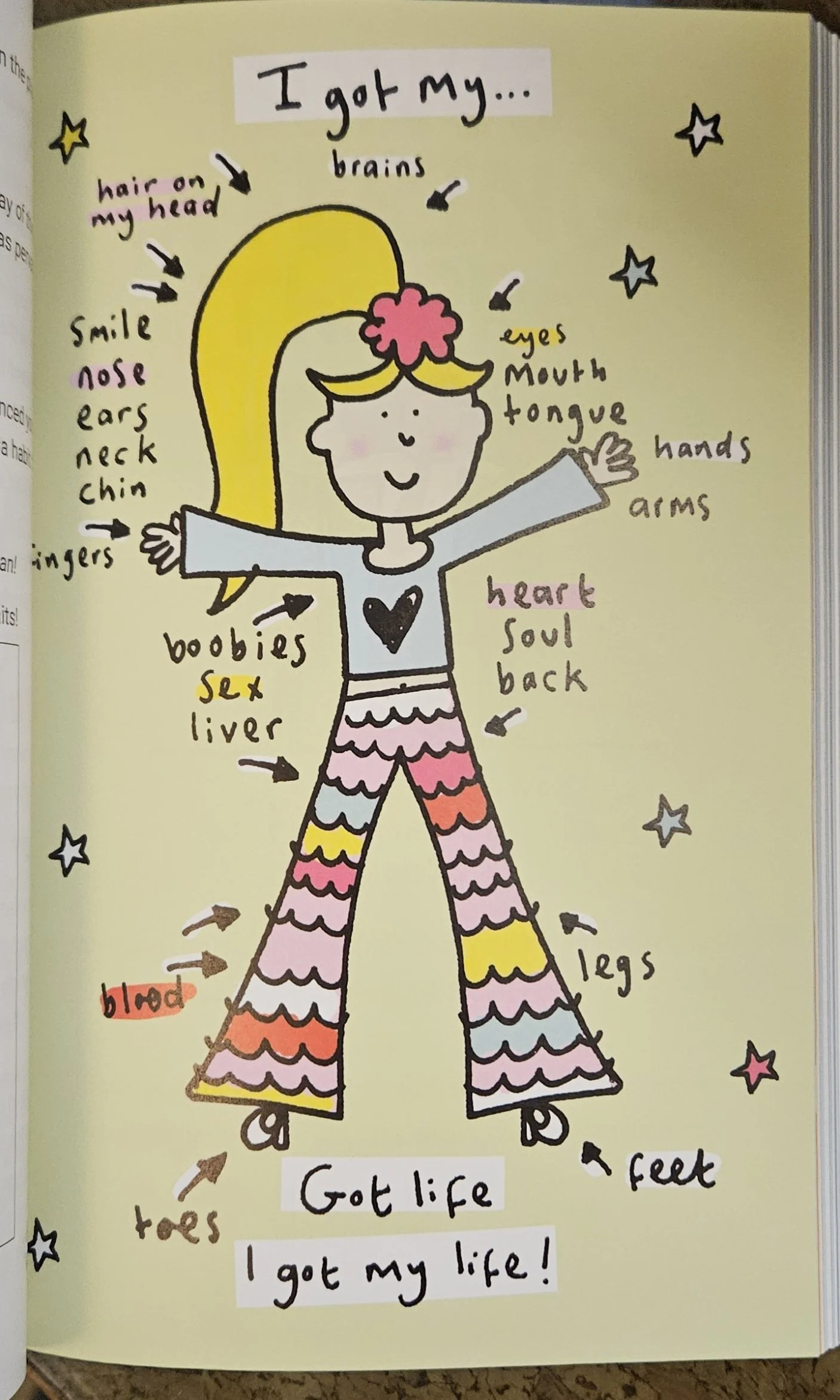

Here’s where things took an unexpected turn for me. The ideas themselves optimism, mindset, small daily habits, strengths, gratitude, are ones I naturally gravitate towards. They’re familiar, solid principles from positive psychology, and I was looking forward to seeing how the authors positioned them.
But the way the book was packaged made the experience surprisingly difficult.
What did I learn? Honestly, not much. Here’s why.
The childlike tone distracted from the substance
I usually appreciate books that make complex topics accessible, but the style here felt overly childish. The illustrations reminded me of Bang on the Door merchandise from the early 2000s, the kind aimed at teenage girls. It created an odd disconnect between the depth of the topic and the tone of the book. Instead of lightening the content, it trivialised it.
The style got in the way of the message
A quirky, friendly approach can be brilliant when it helps people engage with the material. In this case, I felt it drowned out the core ideas. Positive psychology is a rich, evidence-based discipline, and reducing it to cartoons and catchphrases didn’t sit comfortably with me. It ended up feeling more like a novelty gift book than something designed to genuinely help someone reflect.
The accessibility came at a cost
I can see what the authors were trying to achieve: make wellbeing feel easy, warm, human and doable. And for some readers, especially those who want something light and undemanding, this style may absolutely work. But for me, the subject was diluted to the point that the stronger messages lost their impact. It felt like a missed opportunity to introduce powerful concepts in a thoughtful, grounded way.
What Did I Think of the Book?
I have to be honest. I hated it-A business book club first. The surprise is that, on paper, it should have been a perfect match for me: positive psychology, practical ideas, a clear focus on mindset and wellbeing. Yet the presentation and tone were such a mismatch with the subject that it became distracting rather than engaging.
The person who recommended it to me is someone I like and respect, which made my reaction even more of a puzzle. But sometimes a book simply doesn’t land, even when the intentions behind it are good.
I’d give this to a teenager to introduce them to positive psychology young. It might genuinely help a struggling teenager out of a funk. But, if like me, you’ve outgrown Bang On The Door, I’d give it a miss. There are better books introducing this subject out there. Personally, I suggest a book I previously reviewed, it's called Flourish by Martin Seligman.
A useful reminder for me, though: the way content is delivered matters as much as the content itself.